Acetic acid (CAS 64-19-7) is one of the oldest and most versatile industrial chemicals. At 100% purity it is called glacial acetic acid — a colourless liquid with a sharp, pungent odour. At lower concentrations it is familiar as vinegar. Industrially, it is produced predominantly via the carbonylation of methanol (Monsanto / Cativa process) and appears in the supply chain of an extraordinary range of industries.
This guide covers the commercial grade spectrum, how each grade is used in manufacturing, and what to verify when sourcing in India. Buying now in Chennai? See our acetic acid supplier in Chennai page for stocked grades, packaging and quote turnaround.

Grade Spectrum
| Grade | Purity | Key Standards | Typical Use |
|---|---|---|---|
| Glacial Acetic Acid | ≥99.5% | BIS IS:695 / Technical | Chemical synthesis, plastics, fibres |
| Technical Grade | 98–99.5% | Manufacturer spec | Rubber, textiles, dyes, adhesives |
| Food Grade (FCC) | ≥99.5% | Food Chemicals Codex | Preservatives, food acidulants, vinegar production |
| Pharma Grade (IP / BP / USP) | ≥99.5% | IP / BP / USP | Pharmaceutical manufacturing, buffer solutions, pH adjustment |
| Reagent / AR Grade | ≥99.8% | ACS / analytical | Laboratories, analytical chemistry |
In practice, glacial acetic acid and technical grade differ more in impurity profile and documentation than purity percentage. The critical specification for most industrial buyers is the assay (by titration or GC), the colour (APHA), and the absence of formic acid — which can be a by-product in some manufacturing processes and is undesirable in most end-uses.
Industrial Applications
Rubber industry: Acetic acid is the primary coagulating agent for natural rubber latex. Diluted to 1–5% concentration, it is added to fresh latex to precipitate the rubber solids. This is one of the largest industrial uses of acetic acid in South India, given the rubber processing industries in Kerala and Tamil Nadu.
Textiles and dyeing: Used to adjust dye bath pH in dyeing synthetic and natural fibres. Acetic acid creates the mildly acidic environment (pH 4–5) needed for acid dyes to bond with nylon and wool fibres. Technical grade is standard for this application.
Pharma and biochemistry: IP, BP, or USP grade glacial acetic acid is used in buffer preparation (acetate buffers), as a pH-adjusting agent in topical preparations, and in synthesis of acetate esters used as solvents and pharmaceutical intermediates. For Indian domestic pharma manufacturing, IP grade is the Schedule M baseline; BP and USP are accepted in export-oriented and multinational-operated facilities.
Chemical synthesis intermediates: Glacial acetic acid is the feedstock for vinyl acetate monomer (VAM), acetic anhydride, ethyl acetate, and a range of acetate esters and dyes. These derivatives make acetic acid a cornerstone of the organic chemical industry.
Metal cleaning and surface treatment: Dilute solutions (5–30%) are used for pickling and brightening of certain metals and in electroplating bath formulations.
How to Specify Correctly
When placing a purchase order, specify:
- Assay: minimum percentage (e.g., "≥99.5% as acetic acid")
- Grade and standard: "Technical", "Food Grade FCC", or "BP Glacial Acetic Acid"
- CAS Number: 64-19-7 (confirms you are ordering acetic acid, not an acetate ester)
- Packaging: drum, carboy, or tanker; and whether HDPE or SS container is required
- CoA requirements: assay, APHA colour, iron content (for pharma grade), formic acid content
Storage and Handling Notes
Glacial acetic acid is corrosive (UN 2789, Class 8) and flammable (flash point 39°C). Store away from oxidising agents and bases. HDPE and stainless steel are compatible storage materials; avoid aluminium above 65% concentration. Appropriate PPE includes acid-resistant gloves and face protection.
Sourcing From SPC
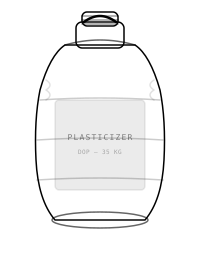
Supreme Petro Chemicals supplies acetic acid in technical and food grades for manufacturers across South India. Available in carboys (35 kg), 200-litre MS drums, and tanker loads. Contact us for current pricing, or browse our acids catalog.
Specification Snapshot
The values below are indicative for the glacial-grade acetic acid Supreme Petro Chemicals supplies from Chennai; a batch-specific Certificate of Analysis accompanies every consignment.
- Appearance: clear colourless liquid with pungent vinegar-like odour
- Assay: 99.8% min (glacial)
- Density: 1.049 g/cm³ at 20°C
- Flash point: 39°C (closed cup)
- Boiling point: 118°C
- Melting point: 16.6°C (solidifies in cold weather)
- HS code / UN number: 2915.21.00 / UN 2789 (Class 8 corrosive; also Class 3 flammable)
- Packaging: 35L HDPE carboy, 200L HDPE barrel, 1,000L IBC tank, bulk tanker
FAQ
What CAS number and HS code should I quote for acetic acid?
Acetic acid carries CAS number 64-19-7 and HS code 2915.21.00. Quoting both on a purchase order, along with the required grade (glacial, technical, food or pharma), avoids any confusion with acetate esters or other related chemicals.
What packaging is acetic acid supplied in?
Supreme Petro Chemicals supplies acetic acid from Chennai in 35-litre HDPE carboys, 200-litre HDPE barrels, 1,000-litre IBC tanks, and bulk tanker loads, matched to the corrosive nature of the material and your handling setup.
How do I get a quote for acetic acid from SPC?
Share your required grade, quantity, packaging preference and delivery location via the contact page. Quotes are typically answered within 4 working hours, Monday to Saturday.