Caustic soda is one of the most widely consumed industrial chemicals in India. It is used wherever strong alkalinity is required: soap and detergent manufacturing, textiles, paper, water treatment, food processing, pharmaceuticals, cleaning compounds, and chemical synthesis.
Supreme Petro Chemicals supplies caustic soda in Chennai for bulk industrial buyers, including caustic soda flakes and caustic soda lye. This guide explains the forms available, key applications, packaging options, grade considerations, and safe handling practices for procurement teams.
What Is Caustic Soda (NaOH)?
Caustic soda is sodium hydroxide, commonly written as NaOH. Its CAS number is 1310-73-2. It is a strong alkali that reacts readily with acids and is highly effective for pH adjustment, cleaning, neutralisation, saponification, and chemical processing.
Because sodium hydroxide is corrosive, procurement should never treat it as a simple commodity item. The correct form, concentration, packaging, storage setup, and safety documentation matter. Buyers should also confirm whether they need flakes, liquid lye, a specific concentration, or a particular purity range for their process.
Forms SPC Supplies: Flakes and Lye
Caustic Soda Flakes — CAS 1310-73-2
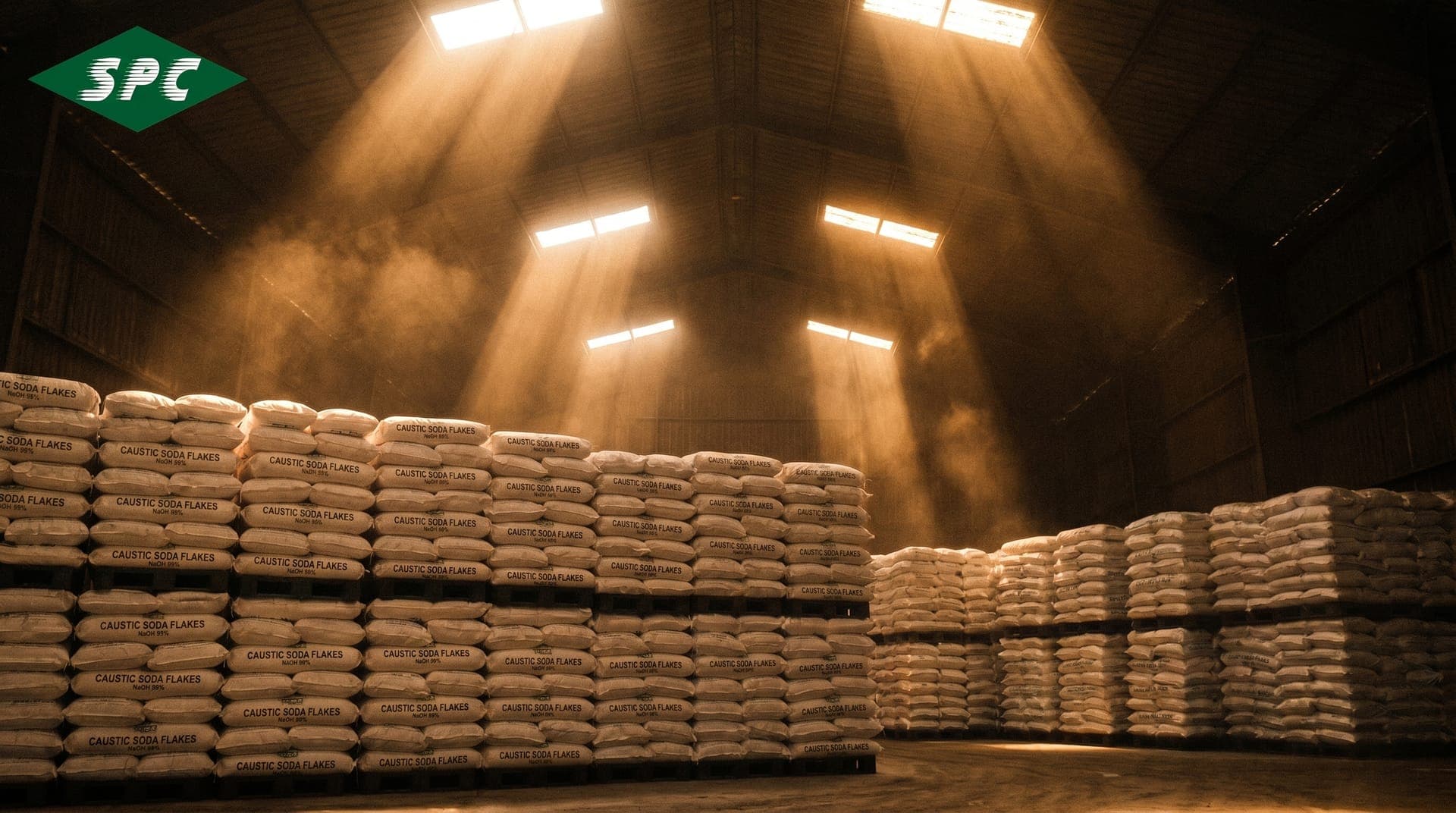
Caustic soda flakes are solid sodium hydroxide, typically supplied in bags. Flakes are preferred by buyers who need easier storage, controlled dosing, or onward dilution at their own facility. They must be kept dry because sodium hydroxide absorbs moisture and carbon dioxide from air.
Caustic Soda Lye — Liquid Sodium Hydroxide
Caustic soda lye is sodium hydroxide in aqueous solution. It is used by plants that consume higher volumes or need direct pumping into process systems. Common commercial concentrations vary by supplier and application, so buyers should specify the required concentration clearly when requesting a quote.
Industrial Applications
Caustic soda has broad industrial use because it provides reliable alkalinity and strong cleaning or reaction performance.
- Soap and detergent manufacturing: NaOH is essential for saponification and alkaline cleaning formulations.
- Textiles: Used in mercerisation, scouring, dyeing preparation, and pH control in wet processing.
- Water treatment: Used for pH correction, neutralisation of acidic streams, and wastewater treatment processes.
- Paper and pulp: Used in pulping, bleaching support, and process water alkalinity control.
- Food processing: Used only in appropriate grades and controlled applications, such as cleaning, peeling, or pH adjustment where permitted.
- Pharmaceuticals: Used in synthesis, cleaning, and pH adjustment where suitable grade and documentation requirements are met.
- Chemical manufacturing: Used to make sodium salts, neutralise acids, and support multiple reaction processes.
Grades and Purity
Commercial caustic soda can be supplied in industrial, technical, or higher-specification grades depending on the application. For most heavy industrial uses, assay, carbonate content, chloride level, iron, and insoluble matter may be relevant. For pharma, food, or export-oriented manufacturing, buyers should request batch-specific documentation and confirm the applicable standard before ordering.
For pharmaceutical applications — where sodium hydroxide is used as a pH adjuster in formulations, in API synthesis, or in cleaning-in-place (CIP) systems — IP, BP, or USP grade with a batch-specific CoA may be required. IP (Indian Pharmacopoeia) grade is the Schedule M GMP baseline for Indian domestic pharma manufacturing; BP and USP grades are accepted in export-oriented facilities and USFDA-approved plants. Confirm the required pharmacopoeial standard with your QA team before ordering.
When raising an enquiry, specify whether the requirement is for flakes or lye, the desired purity or concentration, quantity, packing, delivery location, and any CoA or MSDS/SDS documentation required by your quality team.
Packaging: Bags, Drums, IBCs, Bulk Tanker
Caustic soda flakes are commonly supplied in bags, with bag size depending on source packing and order quantity. Liquid lye may be supplied in drums, IBC tanks, or bulk tanker loads depending on volume and unloading facilities at the buyer's site.
For lye, buyers should confirm whether their receiving location can safely unload drums, IBCs, or tankers. For flakes, buyers should ensure dry storage and prevent exposure to moisture during unloading and internal transfer.
Storage and Handling Safety
Sodium hydroxide is corrosive and can cause serious burns. Store it away from acids, ammonium salts, aluminium, zinc, and incompatible materials. Keep flakes tightly sealed in a dry area. Keep liquid lye in compatible containers with proper labelling and secondary containment where required.
Personnel handling caustic soda should use suitable PPE, including chemical-resistant gloves, eye and face protection, protective clothing, and safety footwear. Always add caustic soda to water slowly when diluting, with cooling and agitation as appropriate; never add water rapidly to concentrated caustic soda. Follow the product SDS and site safety procedures.
FAQ
Do I need caustic soda flakes or lye?
Flakes are suitable when you want solid storage and controlled dilution. Lye is suitable when your process consumes liquid sodium hydroxide directly or in higher volumes. The best choice depends on your handling setup and process requirement.
What documents should I request?
For industrial procurement, request the MSDS/SDS and, where needed, a Certificate of Analysis. Regulated applications may require additional grade-specific documentation.
Can SPC supply bulk tanker quantities?
Bulk tanker supply depends on product form, concentration, destination, and current availability. Share your monthly requirement and unloading details so the team can confirm the right supply option.
Get a Quote
For caustic soda flakes, caustic soda lye, or sodium hydroxide bulk supply in Chennai, contact Supreme Petro Chemicals with your required form, quantity, grade, packaging, and delivery location.