Soda ash — sodium carbonate — is one of the highest-volume industrial chemicals in the world, and a staple input for glass, detergents, textiles, and water treatment. For a manufacturer, the two things that matter most are getting the right grade and holding a reliable supply.
Supreme Petro Chemicals supplies soda ash from Chennai to glass units, detergent and soap makers, textile processors, and water-treatment plants across South India.
What Is Soda Ash?
Soda ash has CAS number 497-19-8 and molecular formula Na2CO3. It is a white, odourless powder or granule that is strongly alkaline in solution. Not to be confused with caustic soda (sodium hydroxide) or baking soda (sodium bicarbonate), soda ash is the workhorse alkali where a milder, buffered alkalinity is preferred over the aggressive action of caustic.
Light vs Dense Soda Ash
Soda ash is supplied in two physical grades with identical chemistry but different bulk density and particle size:
- Light soda ash has a lower bulk density and finer particles. It dissolves readily and is preferred in detergents, chemicals, and applications where fast dissolution matters.
- Dense soda ash has a higher bulk density and coarser, more free-flowing granules. It is preferred in glass manufacturing and in automated handling, where it mixes well with other raw materials and produces less dust.
Choosing the wrong physical grade rarely changes the chemistry, but it affects dosing, dust, flow, and blending — so specify light or dense clearly on the purchase order.
Industrial Uses of Soda Ash
- Glass manufacturing: The largest single use — soda ash lowers the melting point of silica, cutting energy use in glass furnaces.
- Detergents and soaps: A builder and alkalinity source that softens water and boosts cleaning performance.
- Textiles: Used in dyeing and processing to fix reactive dyes and adjust pH.
- Water treatment: Raises pH and carbonate hardness, and helps soften water.
- Chemical manufacturing: A feedstock for sodium silicates, sodium bicarbonate, and other sodium salts.
- Pulp, paper, and metallurgy: Used in pH control and various process steps.
Handling and Storage
Soda ash is alkaline and can irritate skin, eyes, and the respiratory tract as a dust. Handle it with gloves and eye protection, control dust during transfer, and store it in a dry area — it absorbs moisture and can cake if exposed to humidity. Keep bags sealed and off the floor, and follow the product SDS.
Packaging and Supply
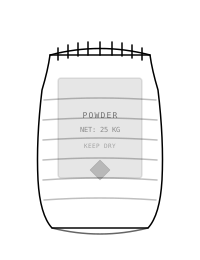
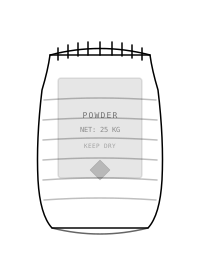
Soda ash is commonly supplied in 25 kg and 50 kg bags, with larger quantities arranged on request. Minimum order and dispatch depend on grade, quantity, and delivery location. For steady production, share your monthly volume so stock can be held and dispatched on schedule. Buyers often pair it with related alkalis such as caustic soda and sodium bicarbonate.
FAQ
What is the difference between soda ash and caustic soda?
Soda ash is sodium carbonate (Na2CO3) — a milder, buffered alkali. Caustic soda is sodium hydroxide (NaOH) — a much stronger, more aggressive alkali. Use soda ash where controlled alkalinity is enough (glass, detergents, pH adjustment) and caustic soda where strong, fast neutralisation or saponification is required.
Should I order light or dense soda ash?
The chemistry is the same; the difference is bulk density and particle size. Dense soda ash suits glass and automated handling (free-flowing, low dust); light soda ash suits detergents and applications needing fast dissolution. Specify the grade on your purchase order.
Does SPC supply soda ash in bulk?
Yes. Supreme Petro Chemicals supplies both light and dense soda ash from Chennai in 25 kg and 50 kg bags, with larger quantities on request. Share your grade, monthly volume, and delivery location for a quote.
Get a Soda Ash Quote from SPC
For soda ash supply from Chennai, view soda ash in our catalogue, call +91 86087 80096, WhatsApp an enquiry, or use the SPC enquiry form.