Buying chemicals well is only half the job. How they are stored on site decides whether they stay usable, stay safe, and stay compliant. Poor storage causes spoiled stock, corroded containers, failed audits, and — at worst — fires and exposure incidents that are entirely preventable.
Supreme Petro Chemicals supplies solvents, acids, and specialty chemicals to manufacturers across South India, and the same questions come up on almost every new account. This guide covers the storage basics every industrial buyer and stores team should have in place.
The First Principle: Segregate Incompatibles
The single most important rule is that incompatible chemicals must be stored apart, so that a leak or spill of one cannot reach another. The classic pairings to keep separated:
- Oxidisers away from flammables and organics. An oxidiser such as hydrogen peroxide or a nitrate can dramatically accelerate a fire if it contacts solvents, fuels, or organic material.
- Acids away from bases. Strong acids and strong alkalis such as caustic soda react violently and exothermically if mixed.
- Acids away from metals and cyanides/sulphides. Many acids release hydrogen or toxic gas on contact with the wrong material.
- Flammable solvents away from all ignition sources and oxidisers.
Where floor space is limited, use physical separation (bunds, separate cabinets, distance) rather than relying on labels alone.
Storing Flammable Solvents
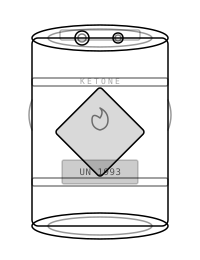
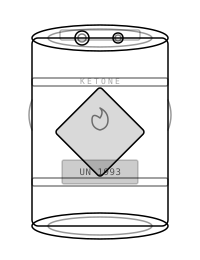
Solvents such as acetone, toluene, and MEK are highly flammable, with flash points at or below room temperature. Store them:
- In a cool, well-ventilated area, away from direct sunlight and heat sources.
- Away from all ignition sources — open flames, sparks, hot surfaces, and unrated electrical fittings.
- With earthing and bonding during transfer, to dissipate the static charge that builds up when flammable liquids are decanted.
- In closed, compatible containers — keep drums and cans sealed when not in use to limit vapour build-up.
- With adequate secondary containment (bunding) to catch leaks.
Storing Corrosive Acids
Acids such as hydrochloric acid, sulphuric acid, and nitric acid need corrosion-aware storage:
- Use acid-resistant containers and shelving — acid fumes corrode metal racking and nearby equipment over time.
- Provide ventilation to clear corrosive vapours, and store in a cool area.
- Keep spill containment and neutralising material close to the storage point.
- Segregate oxidising acids (such as nitric) from organic and reducing materials.
- Ensure acid-resistant PPE — gloves, apron, and face protection — is available at the point of use.
Storing Oxidisers
Oxidisers do not burn themselves but supply oxygen that makes other fires far more intense. Keep them isolated from flammables, fuels, and organic materials, in cool conditions, and in the manufacturer's original vented packaging where specified — some oxidisers, including hydrogen peroxide, are supplied in containers designed to vent safely and must not be tightly resealed in the wrong container.
Setting Up a Compliant Stores Area
A well-run chemical store shares a few common features:
- Clear labelling on every container, with the product name and hazard information visible.
- An accessible SDS file for every material held — see our guide on how to read an MSDS/SDS.
- Segregation zones for flammables, acids, alkalis, and oxidisers.
- Bunding / secondary containment sized for the largest container in each zone.
- Ventilation, spill kits, and the right fire-fighting media for the materials stored.
- Stock rotation (FIFO) so older stock is used first and nothing is held past its useful life.
Always follow each product's SDS and your own site EHS procedure — this guide is a general orientation, not a substitute for either.
FAQ
Which chemicals should never be stored together?
Keep oxidisers away from flammable solvents and organics, and keep strong acids away from strong bases and from reactive metals. As a rule, segregate flammables, acids, alkalis, and oxidisers into separate zones with physical separation, so a leak of one cannot reach another.
How should flammable solvents like acetone and toluene be stored?
Store them in a cool, well-ventilated area away from all ignition sources, in sealed compatible containers, with earthing and bonding used during transfer to control static, and with secondary containment to catch leaks. Follow the product SDS and your site EHS procedure.
Can SPC advise on packaging for safe storage?
Yes. Supreme Petro Chemicals supplies solvents and acids in drums, carboys, IBC tanks, and tanker loads, and can advise on the packaging that suits your storage setup and consumption. Share your material, quantity, and site conditions when you enquire.
Talk to SPC About Safe Supply
For chemical supply with the right packaging and full SDS documentation, call or WhatsApp +91 86087 80096, WhatsApp an enquiry, email Admin@supremepetrochemicals.com, or use the SPC enquiry form. Browse our catalogue to see the full range.